
TO OEM OR NOT TO OEM – THAT IS THE QUESTION
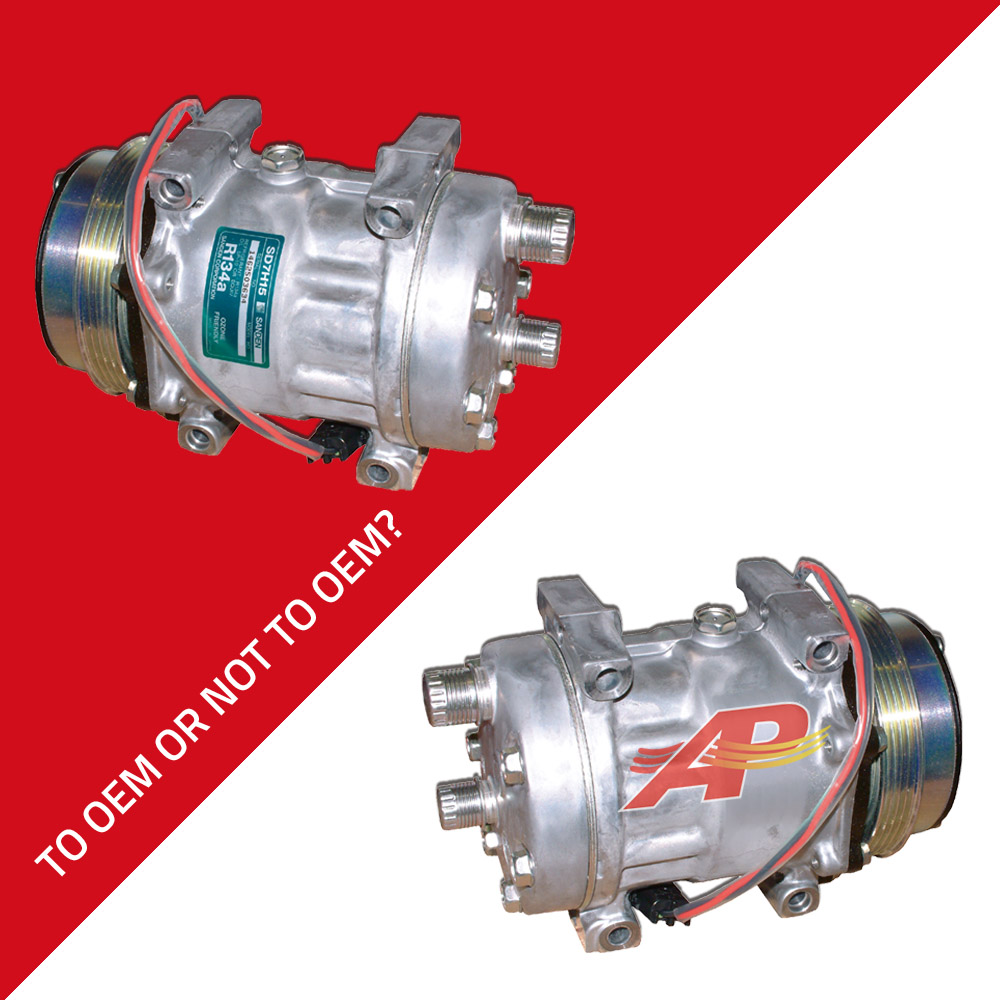
So you buy yourself a knock off watch, it’s a gamble as you don’t know how long it will work but at a fraction of the cost of its branded counterpart you couldn’t resist and hey, it looks like the “real thing”. Question is, would you have the same attitude if we were talking air-conditioning parts?
Machinery is a major investment for any company and regular maintenance is key to ensuring its longevity. Nothing lasts forever and parts inevitably need replacing, which raises the question: OEM (Original Equipment Manufacturer) or aftermarket?
Surely genuine parts are best? Sticking with OEM parts upholds the structural integrity of your vehicle and saves you the hassle of hunting down a like for like alternative. As well as giving you peace of mind that your OEM part is fit for purpose, you’re also likely to benefit from warranty protection.
Sounds like a no-brainer, why go for an aftermarket part? Firstly, don’t confuse aftermarket with reconditioned or used parts. When a part is identified as aftermarket it simply means that it has been produced by a company that isn’t the OEM manufacturer. The cost of aftermarket parts is generally less than OEM but the quality can vary significantly, so it’s sensible to only buy from reputable suppliers. AP Air has a longstanding history of product development and our aftermarket parts undergo rigorous inspection procedures before being released for sale.
Okay, so are there any other benefits to aftermarket? Yes, some aftermarket parts are actually better quality than their OEM equivalents, and many come with warranties that match the terms supplied with genuine parts. By choosing aftermarket you can also shop around for parts – settling on the price and delivery service that suits you best. Dispatching orders to 50 different countries, AP Air has a fast and reliable courier network that provides a next day service for mainland UK so you can avoid downtime.